Metabolic syndrome often develops quietly. Small changes can happen so gradually that they seem normal and are easy to overlook.
Many people think of obvious signs like obesity or diabetes. However, subtle signals can appear much earlier, showing that the body’s metabolism is under stress, even if blood tests seem “acceptable”.
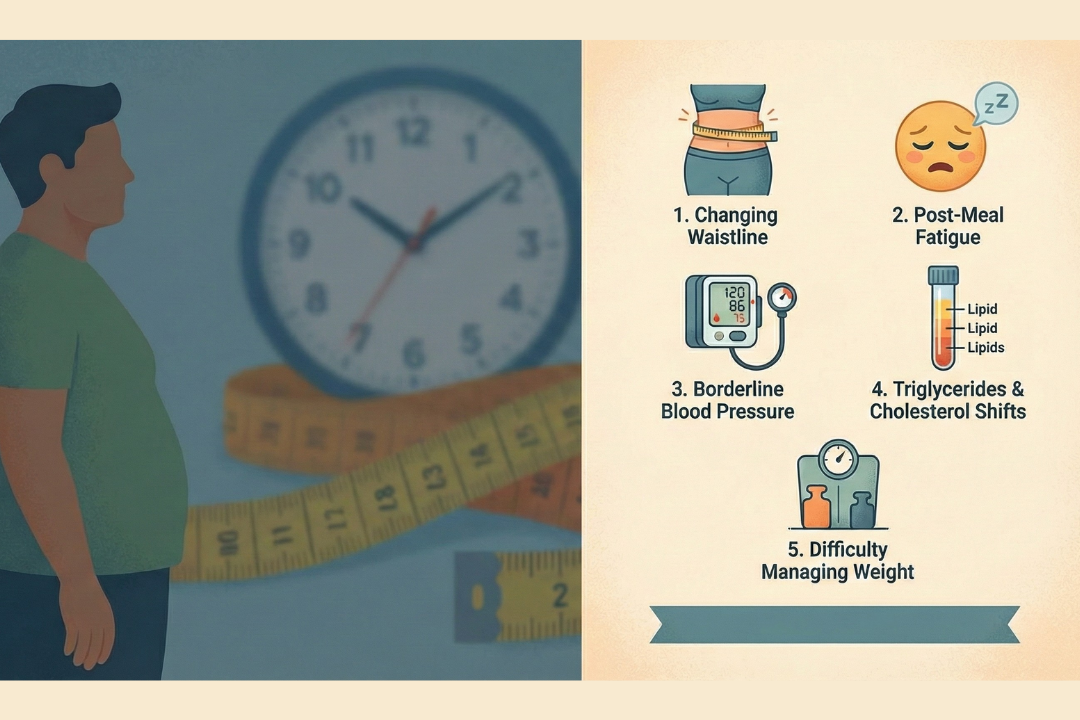
Here are five hidden signs of metabolic syndrome that people often miss, and why they are important.
1. Your waistline is changing, even if your weight isn’t
One of the first warning signs is not how much weight you gain, but where your body stores fat.
A growing waistline, especially more fat around your belly, means you have more visceral fat. This kind of fat acts differently from the fat just under your skin. It is more active in the body and is more closely linked to insulin resistance, inflammation, and heart risk.
You do not need to gain much weight for this to be important. If your pants feel tighter around the waist even though your weight is about the same, it is worth noticing.
2. You feel unusually tired after meals
People often blame feeling tired after meals on being busy or not sleeping well. But if you often feel tired after eating, especially after meals with lots of carbohydrates, it could mean your body is having trouble handling sugar and it is one of the important early signs of metabolic syndrome.
When your body becomes less sensitive to insulin, your blood sugar goes up and stays high longer than it should. Your body has to work harder to keep things balanced, which can make you feel tired or foggy.
It is normal to feel tired sometimes, but feeling this way often is not.
3. Your blood pressure is “borderline” but stable
Metabolic syndrome often develops in a grey area. Things may not seem clearly abnormal, but they are not ideal either.
Blood pressure that is just below the level for treatment is often seen as normal for your age or family history. But when it happens along with other small changes, it can be a sign of stress on your metabolism.
Higher insulin levels change how your kidneys handle salt and how your blood vessels react to pressure. Over time, this can slowly raise your blood pressure, sometimes years before high blood pressure is diagnosed.
4. Your triglycerides are creeping up while cholesterol looks fine
Most cholesterol talks focus on total cholesterol or LDL. However, triglycerides often change sooner and are not discussed as much.
When triglycerides go up and HDL (the “good” cholesterol) goes down, it is a common sign of metabolic problems. This pattern shows how your body handles fats and sugars, not just what you eat.
If these changes happen slowly, it is easy to miss what is really going on unless you look at all the results together.
5. You’re gaining weight more easily and losing it with difficulty
Many people find that things that used to help, like eating less or moving more, no longer work as well.
This is not just about willpower. Changes in your metabolism affect how your body uses energy, controls hunger, and reacts to insulin. As your body becomes more resistant, it gets harder to manage your weight.
If you are having a harder time than before, it does not mean you are doing something wrong. It often means your body has changed.
Why these signs matter
Metabolic syndrome is not just one condition. It is a group of changes that, over time, increase the risk of type 2 diabetes, heart disease, and fatty liver disease.
The sooner you notice these patterns, the easier they are to reverse. Making small, steady changes to how you move, sleep, manage stress, and eat works best before these problems become long-term.
Being aware is not about being alarmed. It is about acting at the right time.
A steadier way to think about metabolic health
Metabolic health is not defined by a single number or diagnosis. It depends on how your body responds each day to food, rest, activity, and stress.
Small changes often appear before bigger problems. Noticing them early gives you time to make steady, lasting changes instead of rushing to fix things later.
If you notice several of these hidden signs of metabolic syndrome, it may be the time to act and meet your doctor who can look at your overall health, not just single test results.