
No relationship is perfect. Arguments happen. People get tired, say the wrong thing, or need space. That’s normal.
But some patterns make relationships feel strong, while others leave you feeling tired or unsure. The signs of a healthy relationship aren’t about big romantic gestures or never arguing. They’re more subtle. You see them in how you talk through misunderstandings, handle tough days, or feel safe sharing your real thoughts.
This isn’t something you pass or fail. It’s a way to notice what’s working and what might need some care. If you see most of these patterns in your relationship, things are likely going well. If not, that’s helpful to know too.
Here’s what to look for.
1. You Feel Safe Being Yourself
Emotional safety is a clear sign of a healthy relationship. It means you don’t have to always watch what you say or hide parts of yourself just to avoid problems.
You can share a worry without it being dismissed. You can admit when you’re wrong without it being used against you later. You can say “I don’t know” or “I need time to think” without your partner turning it into a bigger issue.
This doesn’t mean your actions have no consequences. It means you aren’t always worried about upsetting your partner. You don’t feel tense before every conversation, unsure of how they’ll respond.
Both people should feel this way. If only one person can be honest and the other stays quiet to avoid arguments, that isn’t emotional safety. That’s an uneven relationship.
When you feel safe, you can be uncertain, messy, or human. And your partner doesn’t punish you for it.
2. Communication Feels Clear (Even When It’s Hard)
Healthy communication doesn’t mean you always understand each other. It means you can work through misunderstandings without things breaking down.
You can say what you need without it becoming a big problem. If something is bothering you, you can talk about it. Your partner listens instead of just waiting to argue back.
Silence isn’t used to punish each other. You don’t avoid important topics by default. If something matters, you talk about it, even if it’s hard.
Clear communication also means both people can say “I don’t agree” without ending the conversation. Disagreeing doesn’t mean you’re rejecting each other.
You’ll still have times when things get confusing or emotions are strong. But afterward, you talk things through and clear them up. You don’t let resentment build up over time.
3. Conflict Doesn’t Destroy Trust
Arguments are going to happen. Stress builds, priorities clash, or someone says something thoughtless. What matters is how you handle it.
In a healthy relationship, you argue about the problem, not each other’s character. You don’t bring up old mistakes just to win. You don’t call names or say things just to hurt your partner.
After an argument, things go back to normal. There’s no lasting coldness or days of silence. You fix the relationship instead of letting problems build up.
Both people can say sorry when they’re wrong. And the apologies are real, not just words to stop the argument. You mean it, and you try not to make the same mistake again.
Conflict will challenge your relationship. But if it doesn’t break trust every time, and you both work to fix things, that’s a good sign you’re building something strong.
4. You Both Have Space to Grow
A healthy relationship supports who you are now and who you want to become. Your goals, friendships, and interests aren’t treated as threats.
You don’t have to make yourself smaller to keep your partner happy. If you want to take a class, see friends, or work toward a career goal, it doesn’t cause problems. Your partner wants you to grow, not stay the same just to keep things simple.
This goes both ways. You’re not threatened when your partner has their own life outside the relationship. You encourage it.
Growth happens both on your own and together. You both change as people, and the relationship changes too. You don’t hold on to an old version of each other that doesn’t fit anymore.
When both people have space to grow, the relationship becomes stronger, not weaker.
5. Trust Is Built on Actions, Not Promises
Trust isn’t built by saying the right things. It’s built by doing them.
In a healthy relationship, if someone says they’ll call, they do. If they promise to take care of something, they follow through. And if plans change, they let you know instead of just disappearing.
Patterns matter more than single moments. Missing one call isn’t a trust problem. But if someone often says one thing and does another, trust fades over time.
Trust also means being honest, even when it’s hard. If your partner makes a mistake, they tell you instead of hiding it. If something is bothering them, they talk about it instead of letting it build up.
Trust can be rebuilt after it’s broken, but it takes time and steady action. Words help, but what really fixes things is how you act.
If your partner’s actions usually match their words, that’s a strong sign of a healthy relationship.
6. Boundaries Are Respected, Not Resented
Healthy boundaries don’t push people apart. They make things clearer.
When you say “I need some time alone” or “I’m not comfortable with that,” your partner doesn’t make you feel guilty or turn it into a big problem. They know boundaries aren’t rejections. Boundaries help protect your well-being so you can be your best in the relationship.
Both people can have their own limits. Maybe one person needs more alone time, while the other wants to talk things out right away. These differences aren’t problems to solve. They’re just part of who you are.
Respecting boundaries shows you care. It means your partner values your comfort and mental space, even if it’s not always easy for them.
If boundaries lead to constant arguments or if one person always has to explain their limits, that’s a warning sign. In a healthy relationship, boundaries are normal and needed.
7. You Can Be Happy for Each Other
When something good happens to your partner, you feel truly happy for them. Their success doesn’t make you feel jealous or left out.
Maybe they get a promotion, reconnect with an old friend, or reach a goal they’ve worked for. In a healthy relationship, you celebrate these things. You’re not in competition with each other.
This doesn’t mean you never feel jealous. You might. But it doesn’t turn into resentment or trying to hurt each other. You notice it, talk about it if needed, and work through it together.
Both people want each other to succeed. Your achievements don’t threaten your partner, and theirs don’t threaten you. You’re on the same team, even if you have different goals.
If you can truly support each other, it’s a good sign your relationship is based on respect and care.
Final Thoughts
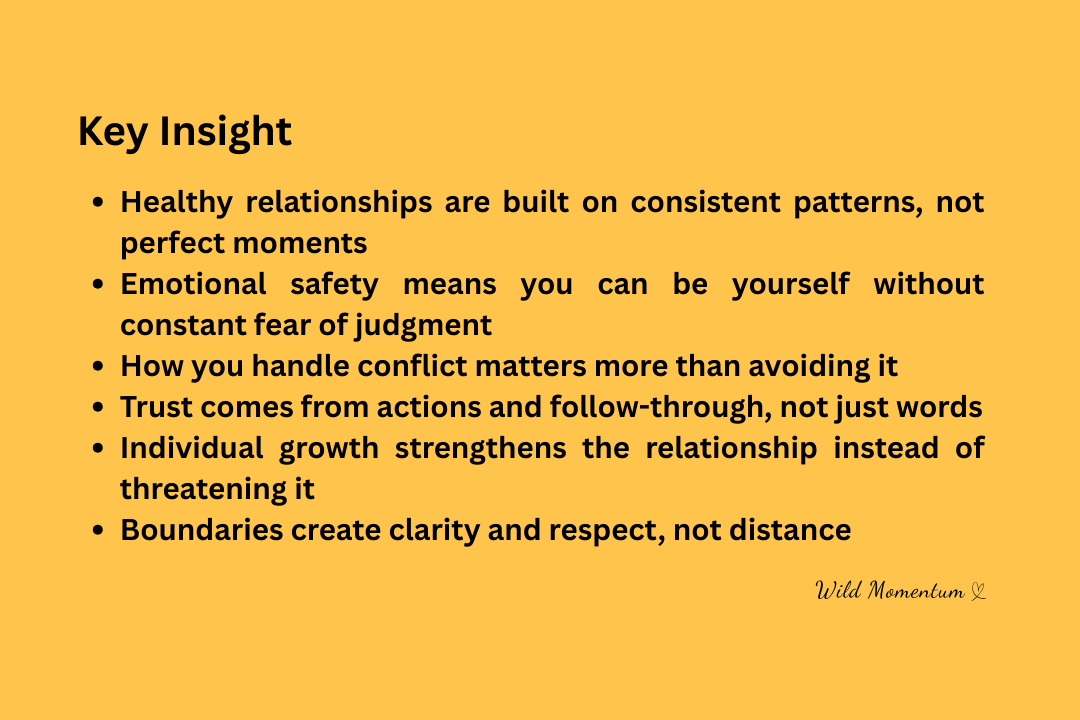
These signs of a healthy relationship aren’t a checklist you finish and move on from. They’re patterns that show up over time, in small moments and tough conversations.
No relationship has all of these signs all the time. People get tired, make mistakes, or go through hard times. But if most of these patterns are there, and both people want to work on what’s missing, your relationship is likely worth keeping.
If many of these signs are missing, it doesn’t mean you’ve failed. It just means you know what needs to change. Some relationships can get better if both people are honest and committed. Others can’t, and that’s okay too.
The goal isn’t perfection. It’s being aware. Notice how your relationship really feels, not just how you hope it feels. Trust the patterns, not just the promises.
And if something feels off, it’s important to pay attention to that.