
I used to feel like I was just going through the motions. I finished tasks, met deadlines, and even reached some big goals, but I still felt like something was missing. I was always busy, but not really satisfied.
Then I found out about SMART goals. At first, I thought it was just another trendy productivity term, but it turned out to be exactly what I needed.
It’s easy to set goals, but making goals that really matter and help you move forward is what makes the real difference.
This framework gave me direction when I felt lost and helped me stop drifting. Once I started using it correctly, I began to see small wins add up in ways I didn’t expect.
What Are SMART Goals?
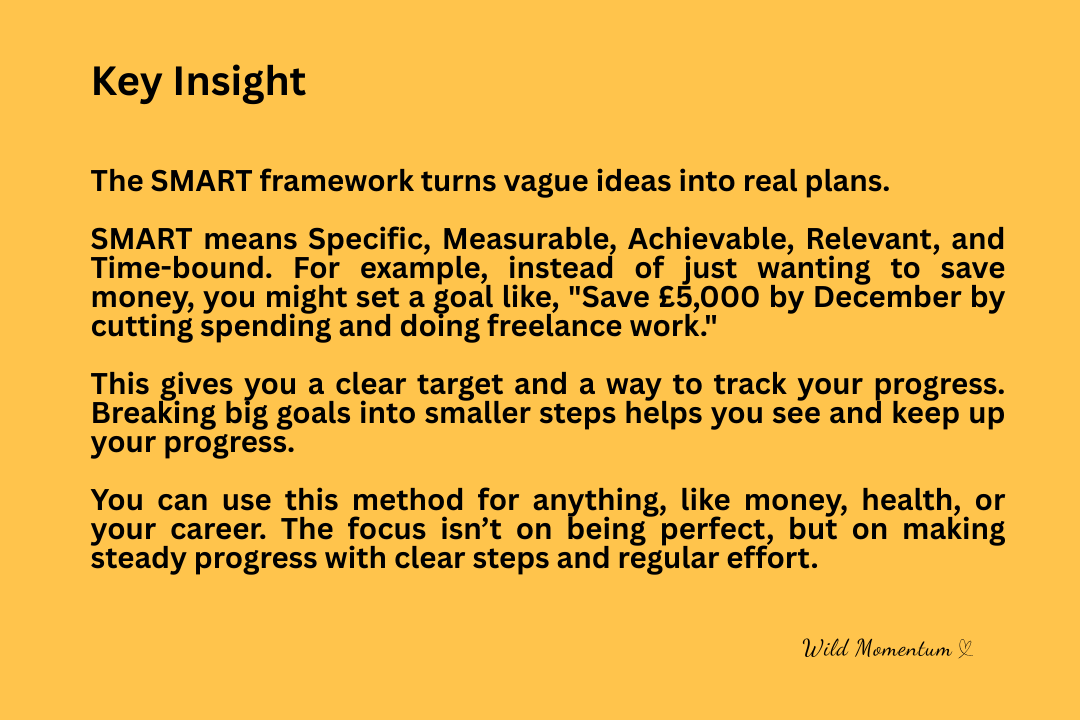
If you haven’t tried this framework before, it’s about making your goals clear. The main idea is simple: your goals should be Specific, Measurable, Achievable, Relevant, and Time-bound.
It helps you turn vague ideas into clear, doable steps.
For example, I used to say, “I want to save money.” That sounded good, but it didn’t really mean anything I could act on.
When I started using the framework, I could track my progress and feel proud as I moved forward.
Here’s how it broke down:
- Specific: Save $5,000
- Measurable: Track progress each month
- Achievable: Cut unnecessary spending and take on a small freelance project
- Relevant: Fund a holiday to switch off and reset
- Time-bound: Achieve this by December
When I put it all together, my goal became: “I want to save $ 5,000 by December by cutting expenses and boosting my income because a relaxing holiday is essential for my wellbeing.”
That small change from just wishing to having a real plan changed how I saw progress. I stopped chasing motivation and started building real momentum.
How to Create Goals That Actually Work
I use the same five steps whenever I want to get clear about my goals. That’s what makes this framework work so well.
1. Specific: Get Honest About What You Really Want
Ask yourself: What do I want to achieve, and why does it matter to me?
Vague goals like “get healthier” or “make more money” don’t give you much to work with. Be clear about what you want and why it matters.
2. Measurable: Give Yourself a Way to See Movement
Ask yourself: How will I track this over time?
When you can measure your progress, it’s easier to keep going. Whether it’s money saved, weight lost, or hours spent, choose something you can track to see your improvement.
3. Achievable: Keep It Real
Ask yourself: Can I actually reach this with what I have right now?
Challenge yourself, but keep your goals realistic. If your goal is too big, you might feel frustrated or burned out.
4. Relevant: Make Sure It Fits Your Bigger Picture
Ask yourself: Why is this important now?
Your goal should match what’s important to you now. If it doesn’t fit your values or priorities, it’s hard to stay motivated.
5. Time-bound: Deadlines Create Momentum
Ask yourself: When do I want this done by?
Without a deadline, goals can drift forever. Setting a clear timeframe gives you urgency and helps you plan how to reach your goal.
It’s not about being perfect. It’s about staying focused and moving forward.
A Real Example: Turning Health Into an Actionable Goal
Here’s one that hit close to home for me: health and fitness.
For years, my only goal was “I want to lose weight.” I had no plan, no timeline, and no clear steps, so nothing really changed, even though I meant well.
When I finally applied the method, it became something real and workable:
- Specific: Lose 10 kg.
- Measurable: Track progress weekly on the same day
- Achievable: Exercise three times a week and eat balanced meals
- Relevant: Feel confident and energised by summer
- Time-bound: Five months from today
Suddenly, my goal didn’t feel so big or overwhelming. I had a clear plan to follow, step by step. Each small win, like running a bit farther or choosing a healthy meal, made me feel real progress.
What Helped Me Actually Stick With My Goals
Here’s what genuinely helped me stay consistent without burning out:
1. Break It Down Into Smaller Steps
Big goals feel smaller when you break them into manageable pieces. Small wins matter more than you might think, and they help build your confidence.
2. Keep Your Why Visible
I keep a photo that reminds me of my goal as my phone wallpaper. It might sound silly, but having a visual reminder helps when my motivation drops.
3. Track Progress Regularly
Seeing your effort turn into results, even small ones, is motivating. I use a simple spreadsheet or notebook to track my progress each week.
4. Stay Flexible When Life Happens
Some weeks don’t go as planned, and that’s okay. Changing your approach isn’t failing; it’s just being realistic and staying committed.
5. Drop the Self-Criticism
If I made a mistake, I stopped being hard on myself. Progress is progress, even if it’s slower than I hoped.
6. Get External Accountability
I shared my goal with a friend, which made it feel more real. Having someone else know about it helped me keep going when my own motivation faded.
7. Learn From Setbacks
Every setback taught me something helpful. Instead of giving up, I started asking myself, “What can I learn from this about how I’m working toward my goal?”
Why This Framework Works Better Than Vague Intentions
The SMART method showed me that success isn’t about big leaps or sudden changes. It comes from taking small, steady steps in the right direction over time.
It’s helped me turn vague hopes into real plans that work. Whether it’s money, health, career, or personal growth, this approach gives me a way to make progress I’m proud of.
There’s a big difference between saying, “I want to be healthier” and “I will exercise three times a week for the next three months.” One is just a wish, but the other is a real plan. One sounds nice, but the other helps you make progress.
Getting Started With Your First Goal
Start with something small that truly matters to you right now. Don’t choose a goal just because you think you should or because it looks good to others.
Ask yourself:
- What’s one area of my life where I feel stuck or unclear?
- What would meaningful progress look like in three months?
- What’s one specific outcome I could commit to achieving?
Then use the framework: make your goal Specific, Measurable, Achievable, Relevant, and Time-bound. Write it down where you’ll see it often and tell someone who can check in with you.
Remember, you don’t need to be perfect. The goal is progress. Even small steps in the right direction add up to real results over time.
Your vague ideas deserve to become real plans. The SMART framework is the tool that helps you make that happen.