Why Home Workouts Work
You don’t need much equipment to begin.
You don’t need much equipment to begin.
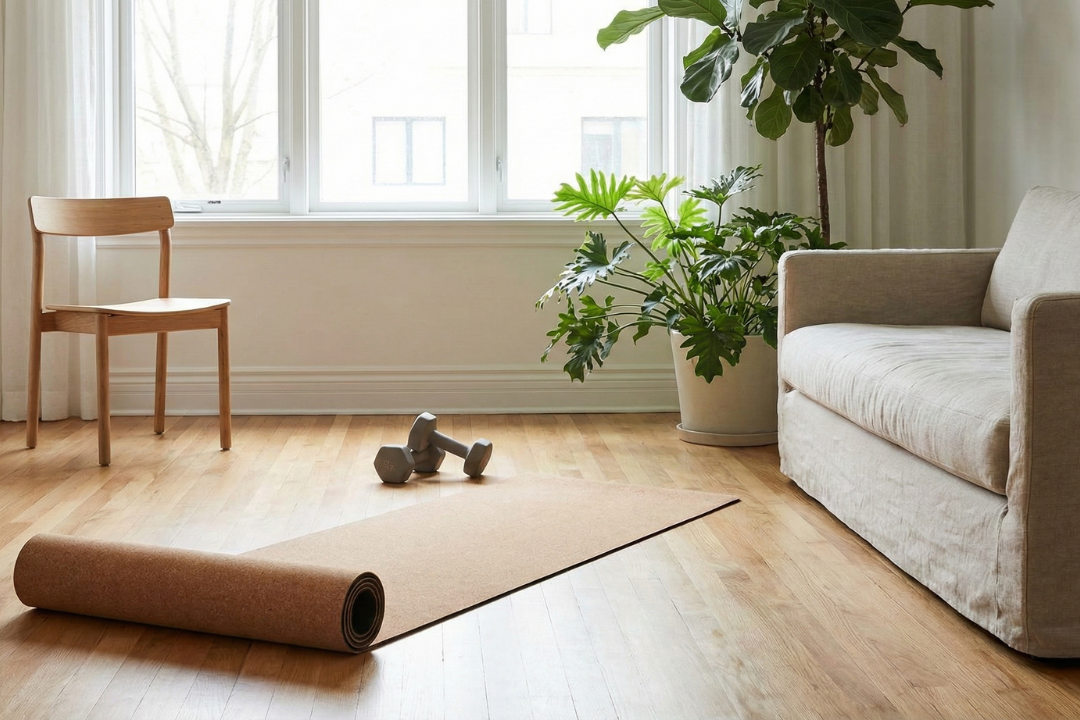
A yoga mat, light dumbbells (3-5kg), and a sturdy chair are enough to start. Add resistance bands or heavier weights later if you want, but they’re not necessary at first.
Being consistent and using good form matter more than having special equipment. When you make working out easier by staying home, you’re more likely to stick with your routine. That consistency is what builds real strength over time.
Your Full-Body Home Workout Routine
This routine includes strength training, cardio, and core exercises, but won’t leave you feeling worn out. It’s meant to be something you can keep doing, not something that tires you out.
Begin every workout with a 5-10 minute warm-up. Move your joints fully by doing arm circles, bodyweight squats, or jogging in place. Warming up gets your muscles ready and helps prevent injuries.
Lower Body Strength
These three moves build strength in your legs and glutes:
Bodyweight squats: Stand with feet shoulder-width apart. Lower your hips back and down like you’re sitting in a chair. Keep your chest up and knees tracking over your toes. Push through your heels to stand. Start with 3 sets of 12-15 reps.
Dumbbell lunges: Hold a dumbbell in each hand. Step forward with one leg and lower your back knee toward the floor. Your front knee should stay above your ankle. Push back to standing. Alternate legs for 3 sets of 10 reps per side.
Calf raises: Stand on a step or thick book with your heels hanging off the edge. Rise up onto your toes, then lower slowly. This strengthens your lower legs. Try 3 sets of 15-20 reps.
Good form is more important than going fast. Take your time and pay attention to how your muscles feel during each exercise.
Glutes and Core
These exercises target your backside and midsection:
Fire hydrants: Start on hands and knees. Keep your knee bent and lift one leg out to the side. Your thigh should be parallel to the floor. Lower slowly. Do 3 sets of 12 reps per side.
Hip thrusts: Sit on the floor with your upper back against a chair or sofa. Place your feet flat on the floor and bend your knees. Push through your heels to lift your hips until your body forms a straight line from shoulders to knees. Squeeze your glutes at the top. Lower and repeat for 3 sets of 15 reps.
Plank holds: Start on your forearms and toes with your body in a straight line. Keep your core tight and don’t let your hips sag. Hold for 30 seconds to start. Build up to 60 seconds as you get stronger.
Side crunches: Lie on your side with your knees bent. Place your hand behind your head. Lift your upper body toward your hip using your obliques. Lower slowly. Do 3 sets of 15 reps per side.
Core exercises work best when you do them carefully and with focus. Pay attention to each repetition instead of hurrying.
 Arms and Chest
 Arms and Chest
Simple exercises can still make your arms stronger:
Bicep curls: Hold a dumbbell in each hand with arms at your sides. Keep your elbows close to your body. Curl the weights up toward your shoulders. Lower slowly. Do 3 sets of 12 reps.
Triceps dips: Sit on the edge of a sturdy chair. Place your hands next to your hips. Slide your bottom off the chair and lower yourself by bending your elbows. Push back up. Try 3 sets of 10 reps.
Push-ups: Start in a plank position with your hands slightly wider than shoulder-width apart. Lower your chest toward the floor. Push back up. If full push-ups are too challenging, do them on your knees. Aim for 3 sets of as many as you can manage with good form.
You’ll see progress in your arms over time. It’s better to move with control than to do lots of fast repetitions.
Cardio
- Jump rope: This gives you a full-body cardio workout in minutes. Start with 1-2 minute intervals and build up from there.
- Mountain climbers: Start in a plank position. Bring one knee toward your chest, then quickly switch legs. Keep your core tight. Do 3 sets of 30 seconds.
- Indoor jogging: If the weather keeps you inside, jog in place or around your living space for 10-15 minutes. It’s simple but effective.
Building Your Weekly Workout Plan
Being consistent is more important than working out as hard as you can every day. Find a routine you can stick with over time.
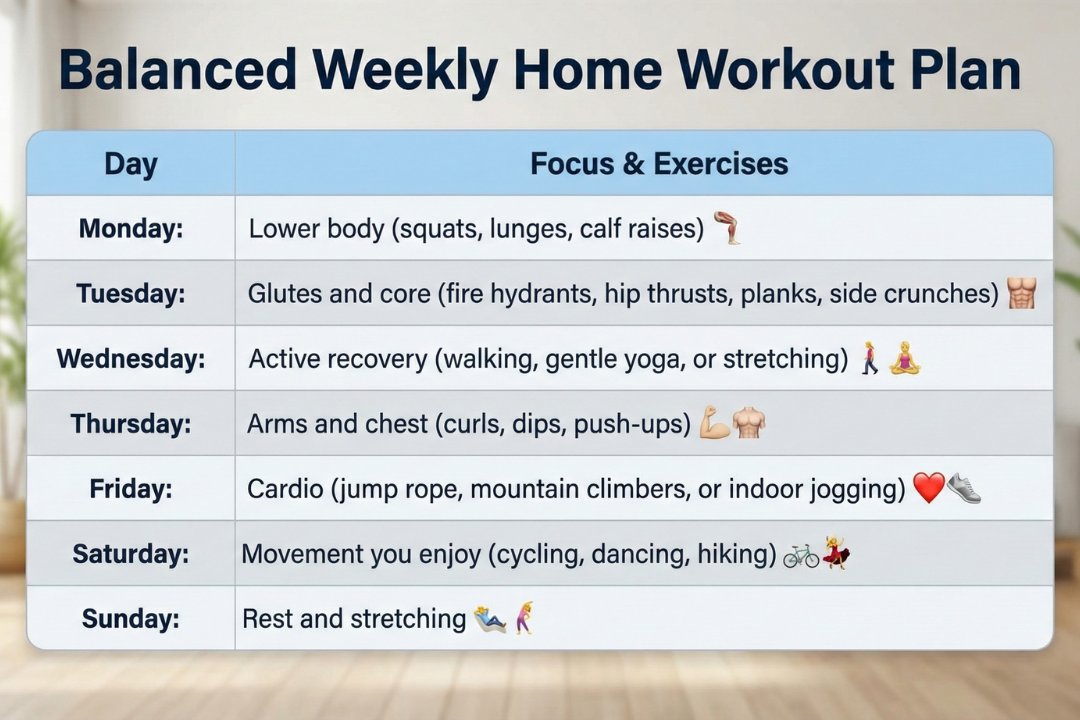
Here’s a balanced weekly structure:
- Monday: Lower body (squats, lunges, calf raises)
- Tuesday: Glutes and core (fire hydrants, hip thrusts, planks, side crunches)
- Wednesday: Active recovery (walking, gentle yoga, or stretching)
- Thursday: Arms and chest (curls, dips, push-ups)
- Friday: Cardio (jump rope, mountain climbers, or indoor jogging)
- Saturday: Movement you enjoy (cycling, dancing, hiking)
- Sunday: Rest and stretching
This plan lets your muscles recover while keeping you active most days. Rest is just as important as exercise.
Feel free to change this schedule to fit your life. If you need to switch days, that’s fine. The main thing is to keep showing up, not to follow the plan perfectly.
Making Home Workouts Sustainable
 Making Home Workouts Sustainable
Your surroundings can influence how motivated you feel. Even small changes can help a lot.
- Set up a spot just for working out. You don’t need a whole room—just a corner big enough for a yoga mat is enough. Using the same space each time helps you get into the habit.
2. Choose equipment you’ll really use. A yoga mat you like and comfortable workout clothes can make exercise more enjoyable. Play music that gets you moving.
3. Eat well to support your workouts. Lean protein, colorful vegetables, and plenty of water will give you more energy and help you recover faster.
4. Keep track of your progress in a simple way. Write down your workouts or just notice when you can do more reps or hold a plank longer. Seeing your improvements helps you stay motivated.
5. Make sure to rest. Your muscles get stronger when you recover, not just when you train. Skipping rest days won’t help you get results faster.
Common Mistakes to Avoid
Skipping the warm-up: Going straight into heavy exercises increases the risk of injury. Always take 5-10 minutes to prepare your body.
Sacrificing form for reps: Doing 20 sloppy squats doesn’t help you. Doing 10 with proper form does. Slow down and focus on technique.
Training the same muscles every day: Your muscles need time to repair. Give each muscle group at least 1 day of rest before retraining.
Expecting quick results: It takes weeks to build strength, not just a few days. Be patient and keep at it.
Forgetting to make progress: When exercises start to feel easy, add more reps, try tougher versions, or use heavier weights. As your body gets stronger, your routine should change too.
When to Get Professional Guidance
This routine is a good starting point for general fitness. If you have injuries, health issues, or special goals, a qualified fitness professional can help you train safely and get better results.
A personal trainer or physiotherapist can look at your needs and make a program just for you. This is especially helpful if you’re new to exercise or coming back after a long break.
Your Next Steps
You don’t need a gym membership or pricey equipment for a full-body home workout. What you need is a plan, regular effort, and patience with yourself.
Try this routine for four weeks. Pay attention to how you feel, not just how you look. Strength and confidence both grow over time.
Your living room is all you need. What really counts is your commitment.
Keep showing up, focus on your movements, and trust that you’ll see progress.