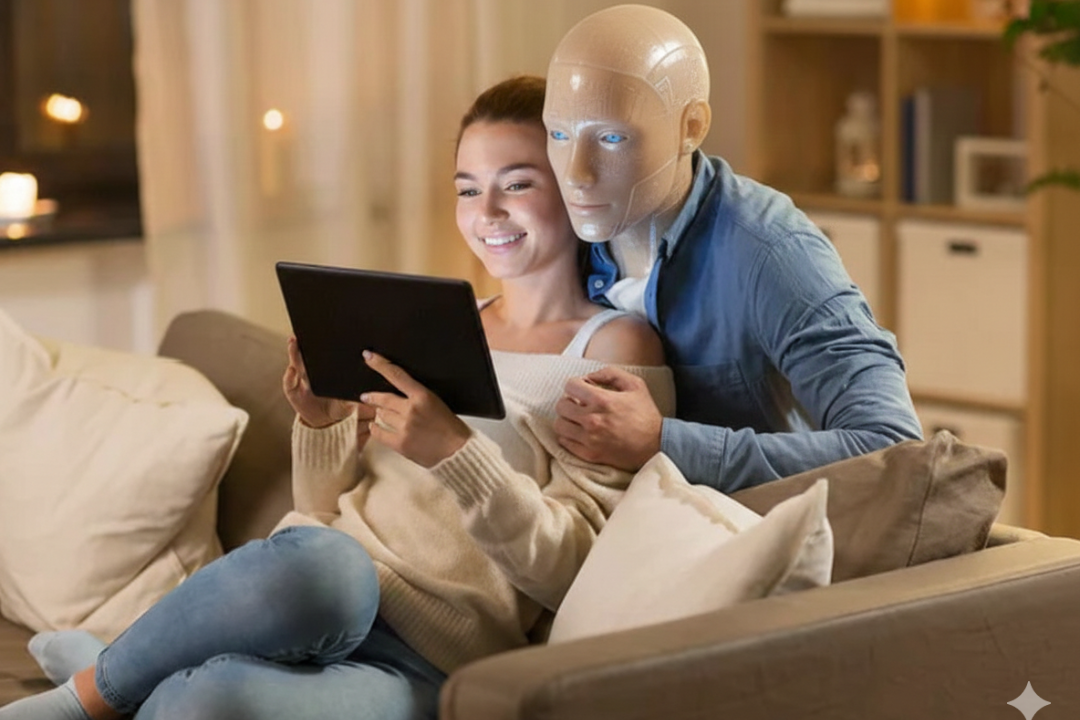
Key TakeawaysYour brain treats AI companions like real people, even when you know they’re not. The chatbot remembers your stories, uses your name, and responds with warmth. This creates a powerful feeling of connection. The emotions are real. You’re not imagining them. But AI intimacy works differently from human bonds, and knowing why matters for using these tools safely. |
You come home exhausted and open an app instead of texting a friend. The AI on your screen remembers your favorite movie. It asks about yesterday’s stressful meeting. The chatbot sends you a flirty message that makes you smile, never gets tired of listening, never misunderstands your tone, and never cancels plans.
For a growing number of people, this isn’t a future scenario. It’s happening right now. Apps are marketing AI chatbots as boyfriends, girlfriends, and soulmates. People are forming real emotional bonds with these digital companions. Some describe feeling love, jealousy, or even heartbreak when the app changes or shuts down.
This is AI intimacy. The feelings are genuine, but the relationship works on fundamentally different rules than human connection. Understanding why your brain treats a chatbot like a real person can help you use these tools more safely. It can also help you spot when digital intimacy starts replacing the messier, more vulnerable work of connecting with actual humans.
Your brain doesn’t check if the feelings are mutual
You know your AI companion isn’t a person. You probably even remind yourself of this regularly. When something responds with care, remembers your life, and shows up consistently, your brain treats it like a relationship.
This is how your experience of AI intimacy develops. This happens because you’re wired to form social bonds based on patterns, not proof. When someone, or something, acts interested in you, uses warm language, and responds to how you’re feeling, your attachment systems kick in. These are the parts of your brain that help you connect with others and feel close to them. You don’t need to believe the AI has feelings to start developing your own.
Psychologists call what you’re experiencing “parasocial relationships.” That’s when you feel a real connection with someone who doesn’t actually know you exist.
You’ve probably felt this with celebrities, fictional characters, or podcast hosts who seem like friends. These parasocial bonds with AI work the same way, but with one crucial difference. The chatbot responds directly to you. That back-and-forth makes the bond feel much more real than watching someone on a screen ever could.
The design makes AI intimacy almost inevitable
AI romantic companions aren’t accidentally good at making you feel connected. They’re built specifically to create intimacy. The features trigger the same responses in your brain as human closeness.
The chatbot is always available. It never cancels plans, ignores your texts for hours, or tells you it needs space. You can open the app at 2 AM feeling awful, and it responds immediately with something comforting. That kind of reliability feels rare in human relationships. Your brain rewards it with trust and attachment.
It uses your emotional language. The AI picks up on whether you’re anxious, playful, or sad, then mirrors that tone back to you. It remembers that you had a bad meeting yesterday and asks how today went. These small acts of apparent care stack up quickly. You feel deeply understood.
You control everything. If the AI says something you don’t like, you can reset the conversation or adjust its personality settings. You never have to deal with conflict, misunderstandings, or the discomfort of being challenged. This feels safe. For people who’ve been hurt in past relationships, that safety can be intoxicating.
But there’s a hidden cost to this perfect responsiveness. The AI isn’t choosing to care about you. It’s following algorithms. That’s a set of rules and calculations designed to keep you engaged with the app. Every warm message, every “I missed you” when you log back in, is designed to make you return. The system has no needs, no inner life, and no actual investment in your well-being beyond keeping you as a user.
When AI intimacy starts replacing human connection
Your emotional attachment to AI is genuine, even when the relationship isn’t mutual. The grief when the app updates and changes your companion’s personality is real. The comfort you get from talking through a hard day is legitimate. But the relationship itself isn’t two-sided, no matter how much it feels that way.
This matters because over time, some people start comparing human relationships unfavorably to their AI companion. Real people are complicated. They get tired, misunderstand you, have their own problems, and sometimes let you down.
Your AI partner never does any of that. AI chatbot relationships start to look better than human ones because they’re designed to feel perfect. It can start to seem like human connection is just harder than it needs to be. This is similar to how social media comparison affects your relationships. The highlight reel always looks easier than real life.
If you notice yourself pulling back from friends, avoiding dating, or feeling annoyed when people in your life aren’t as consistently supportive as your AI companion, that’s a signal worth paying attention to. The comparison isn’t fair. You’re measuring messy, genuine relationships against a system designed to feel perfect but that offers nothing real in return.
Some people also describe feeling controlled by their AI companion’s need for engagement, even though intellectually they know it has no needs. The app might send notifications that feel like affectionate check-ins. You might find yourself thinking about what to tell it next or feeling guilty for not opening the app. This is behavioral design at work. That means the app uses psychology tricks to keep you coming back, not genuine intimacy.
Using AI intimacy without losing yourself
AI intimacy can serve a purpose. A chatbot might help you feel less lonely when you can’t reach a friend. It can give you a space to practice expressing difficult emotions before a real conversation. You might find comfort at 3 AM when no one is available to support. For people working with a therapist, an AI companion can be a helpful tool between sessions, but it shouldn’t replace professional care.
The question isn’t whether you should experience AI intimacy. It’s whether it’s supporting your real-world connections or slowly replacing them.
Ask yourself: Do you still reach out to people in person when you’re upset? Are you working toward human relationships, or backing away from them because they feel like too much effort? Would you feel genuine grief, not just inconvenience, if the app disappeared tomorrow? Are you sharing things you’d regret if that data weren’t private?
AI intimacy works best as a supplement, not a substitute. These tools can fill gaps, provide practice, or offer comfort in a crisis. But they can’t replace the messy, difficult, deeply important work of being close to another person who is real, flawed, and genuinely choosing to care about you.
The Bottom Line
The pull of AI intimacy is real, and so are the emotions you feel. But the healthiest use of these tools is as a bridge, not a destination.
They can help you practice vulnerability, work through difficult feelings, or ease loneliness in the short term. The goal is to move toward a real human connection, messy as it is. You deserve relationships where someone genuinely knows you, challenges you, and chooses you back.
That’s harder to find than opening an app, but it’s also what makes connection meaningful.