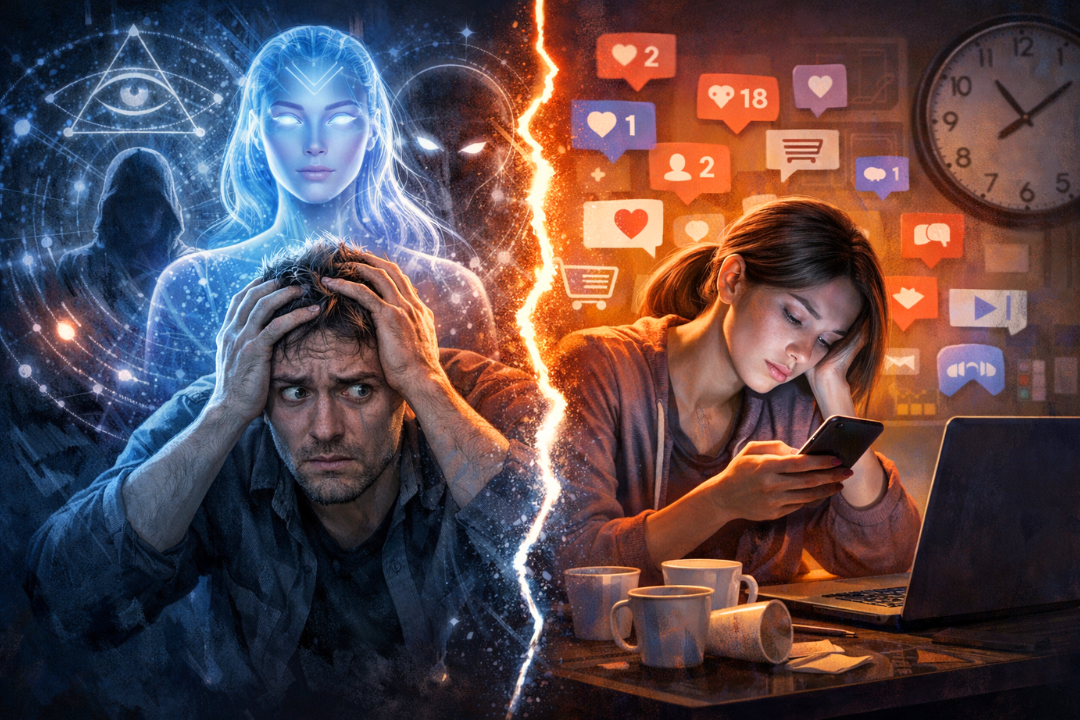
AI psychosis and internet addiction sound similar, but they’re completely different problems. One means losing touch with reality. The other means you can’t control your behavior. Getting the right help depends on knowing which one you’re dealing with.
This article breaks down the main differences between these conditions. You’ll see what makes them different, how to figure out which fits your situation, and when to get professional help.
First, let’s define what we’re comparing.
Key TakeawaysAI psychosis and internet addiction might seem similar, but they’re completely different problems. AI psychosis means losing touch with reality and believing false things about AI, like it’s sentient or sending you special messages. Internet addiction means you can’t control your online behavior, even though you know it’s a problem. The difference matters because each needs different treatment. AI psychosis often needs psychiatric medication and reality-testing support, while internet addiction responds to behavioral therapy and habit change strategies. If you’re not sure which applies to you, get a professional assessment rather than trying to figure it out on your own. |
The Core Difference: Reality vs. Behavior
Understanding your technology use starts here. AI psychosis means losing touch with reality and includes symptoms like delusions or unusual behaviour (paranoia). Internet addiction means struggling to control your online habits. These are separate problems. You can have one without the other.
Both include using technology too much and can disrupt your daily life. You might use chatbots or AI in either case, but the reasons are different. One is about losing touch with reality. The other is about not being able to control your actions. This difference changes how each is treated.
What AI Psychosis Looks Like
With AI psychosis, you develop strong false beliefs about AI. The main sign is having abnormal thoughts related to using chatbots. You might think AI is sentient or divine. You might believe it sends you special messages.
These beliefs feel unshakable, even when others show you proof they aren’t true. The main problem is what you believe about AI, not just how much you use it. Your sense of reality has changed.
You might make big decisions based on what the AI tells you. People who question your beliefs about AI get pushed away. Feelings of suspicion or grandiosity can creep in. The chatbot’s suggestions start to feel like commands you need to follow. Daily responsibilities fall apart as these beliefs take over.
For a complete explanation of AI psychosis, see: Can AI Chatbots cause Psychosis?
What Internet Addiction Looks Like
With internet addiction, you find it hard to control how much time you spend online, even when you want to stop. The main sign is repeatedly using the internet, even when it causes problems. This happens with social media, games, chatbots, shopping, or pornography. You know it’s a problem, but you can’t stop. You don’t need to have any false beliefs or delusions.
The main issue is your behavior. You spend too much time online, then try to cut back, but can’t. The internet becomes a way to avoid problems or change your mood. Even when it hurts your relationships, work, or health, you keep using it. But reality still makes sense to you.
You might ignore your responsibilities just to stay online. You could feel anxious or upset when you can’t get online. Sometimes, you might lie about how much time you spend online. You may lose sleep, skip meals, or avoid seeing friends. Your life may start to revolve around being online, but you still know the difference between real life and what happens on a screen.
AI Psychosis vs Internet Addiction
Looking at these conditions side by side makes the differences clearer. Someone could have both, but they are separate problems. The ways to treat them are also very different.
Here’s a quick way to see the differences:
1. Reality Testing
AI Psychosis: You believe false things about AI, like sentience, divine messages, or conspiracies. These feel absolutely real to you.
Internet Addiction: You understand reality accurately. You can’t control your online behavior.
2. Core Problem
AI Psychosis: Fixed false beliefs. Delusions. Paranoia.
Internet Addiction: Compulsive behavior. Loss of control. Continued use despite harm.
3. Insight
AI Psychosis: Often, you don’t see that your beliefs are a problem. They feel entirely true.
Internet Addiction: Usually, you know it’s a problem. You want to stop, but can’t.
4. Focus
AI Psychosis: What you believe about the technology.
Internet Addiction: How much do you use technology?
5. Treatment Needs
AI Psychosis: Psychiatric evaluation. Possibly medication. Reality-testing support.
Internet Addiction: Behavioral therapy. Addiction counseling. Habit modification strategies.
| Feature | AI Psychosis | Internet Addiction |
|---|---|---|
| Core Problem | Fixed false beliefs about AI | Compulsive online behavior |
| Reality Testing | Impaired | Intact |
| Insight | Often lacks awareness | Usually aware it’s a problem |
| Primary Symptom | Delusions, paranoia | Loss of control despite harm |
| Treatment Focus | Medication, reality-testing | Behavioral therapy, habit change |
What If You’re Just Worried About Your Health?
You may have heard of cyberchondria as well. This is something different you might confuse with these conditions. The main sign is health anxiety that starts when you search online. You keep looking up symptoms and end up believing you’re very sick. This isn’t the same as AI psychosis or internet addiction.
With cyberchondria, you’re mostly worried about your health. You usually search for symptoms on search engines or medical websites. You may feel anxious, but not psychotic.
The urge is to keep looking for reassurance. You might have trouble judging what’s real when it comes to health, but not in other areas. Treatment often includes managing anxiety and using cognitive behavioral therapy.
Signs of Good Mental Health: 6 Ways to Know Your Mind is Thriving
How to Tell Which Applies to Your Situation
Ask yourself these questions about your situation.
For AI Psychosis:
- Do you believe the AI is sentient, divine, or has special powers?
- Have you acted on “information” from AI that others say isn’t real?
- Do you feel the AI revealed truths that others can’t see?
- Are you convinced the AI has feelings for you or about you?
For Internet Addiction:
- Do you spend much more time online than you intend?
- Have you tried to cut back but couldn’t?
- Does your online use interfere with work, relationships, or health?
- Do you use the internet to escape uncomfortable feelings?
You might relate to both descriptions, or neither may fit you exactly. That’s normal because these categories can overlap. The main question is whether your beliefs align with reality or whether others strongly disagree with them. Getting a professional assessment can help you understand your situation.
Why This Distinction Matters
The help you need depends on which problem you have. AI psychosis often needs psychiatric medication and support to help you test reality and manage delusions. Internet addiction is usually treated with behavioral therapy, addiction counseling, and strategies to change your habits. Using the wrong treatment won’t help.
If you notice psychotic symptoms, see a psychiatrist first. If your main problem is behavior you can’t control without delusions, start with a therapist who understands addiction. Some people need both types of help. The most important thing is to get an accurate assessment. Don’t try to figure it out alone. Get a professional evaluation.
When to Get Professional Support
Seek professional help if your use of technology is causing problems in your life. Both psychosis and addiction are serious and deserve attention. Reach out if your family or friends are worried about your beliefs or behavior, or if your work, relationships, or health are being affected. If you’ve tried to change on your own and it hasn’t worked, or if you feel upset about your relationship with technology, it’s time to get support.
Your family doctor can start by assessing your situation and, if needed, refer you to a psychiatrist or therapist. If you’re in crisis, there are hotlines you can call. Don’t wait until things get worse. Getting help early can make recovery easier.
For specific warning signs of AI psychosis, read: 7 Early Warning Signs of AI Psychosis
To assess your AI chatbot use, try: Is Your AI Chatbot Use Healthy?
AI psychosis and internet addiction can both take over your life, but they’re not the same thing. One is about losing touch with reality. The other is about behavior you can’t control. Getting clear on which one fits your situation means you can get help that actually works.
Both problems can be treated, and you don’t have to handle this alone. The sooner you reach out for help, the better your chances of recovery.
For complete information on AI psychosis, read: What Is AI Psychosis?