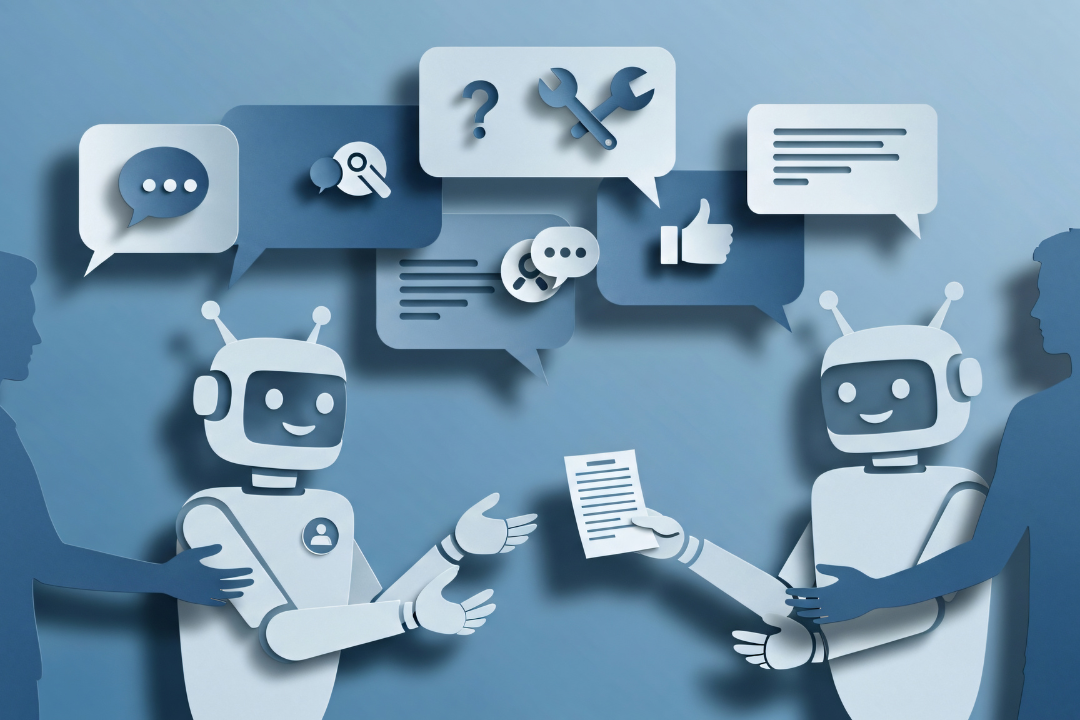
By 2026, the problem most people will face won’t be access to tools, information, or opportunities. It’ll be mental overload.
Endless inputs. Constant decisions. The pressure to “keep up.” These create a background hum of stress that makes even capable people feel scattered. Productivity systems promise control but often add another layer of complexity. The result? Busy yet unclear. Informed yet mentally exhausted.
AI tools are typically presented as a way to work faster or produce more. That framing misses the deeper opportunity. Used poorly, AI becomes another source of noise. Used well, it does the opposite. It helps organise thinking, reduces the invisible burden of everyday decisions, and creates space for reflection and growth.
This article reframes AI for 2026 in three roles that matter most: a strategic thinking partner, a mental load filter, and a tool for reflection and intentional growth.
 1. AI as a Strategic Thinking Partner in 2026
 1. AI as a Strategic Thinking Partner in 2026
Most people struggle with decisions not because they lack intelligence or information, but because their thinking is unstructured.
Ideas collide with emotions. Assumptions go unchallenged. Everything feels urgent at once. In this state, even small choices become draining. Strategic thinking, in contrast, is about slowing things down just enough to see what matters.
AI can act as a neutral thinking partner. Not an authority. Not a replacement for judgment. But a space where thoughts can be clarified without pressure. When you explain a problem to an AI tool, you’re forced to put vague concerns into words. That alone brings relief.
From there, AI can help organise priorities, surface trade-offs, and highlight assumptions you might not notice on your own.
Prompts You Can Try
For clarifying foggy goals:
| “I’m feeling unclear about my direction right now. My main goal is [describe goal], but I’m not sure what realistic next steps look like. Can you help me break this down into smaller, achievable components and identify what I could focus on first?” |
For making difficult decisions:
| “I’m trying to decide between [Option A] and [Option B]. Here’s my situation: [brief context]. Can you help me explore the trade-offs of each option and surface any assumptions I might be making?” |
For planning with uncertainty:
| “I want to [achieve something], but I’m dealing with [constraint or uncertainty]. Can you help me think through 2-3 realistic approaches that account for this constraint, and what each path might require?” |
In 2026, the most valuable use of AI won’t be generating answers. It’ll be shaping better questions. When goals feel foggy, AI can help break them into smaller, more realistic components. When plans feel overwhelming, it can help sequence steps. When doubts creep in, it can help examine whether they’re grounded or habitual.
This is particularly useful in moments of transition. Career changes, lifestyle adjustments, or shifts in identity often come with emotional weight that clouds thinking. AI offers a way to externalise the problem. You can explore scenarios, test different approaches, and think through consequences without the fear of being judged or rushed.
For career transitions:
| “I’m considering a career shift from [current role/field] to [potential new direction]. I’m worried about [specific concern]. Can you help me think through what skills transfer, what gaps exist, and what a realistic transition path might look like?” |
The clarity that emerges isn’t because AI “knows better.” It’s because it helps you think more deliberately.
However, boundaries matter. Strategic thinking still requires human judgement, values, and lived experience. AI doesn’t understand context the way you do. Its role is to support clarity, not dictate direction. When used with this mindset, it becomes a tool for steadier decision-making rather than another voice telling you what to do.
The deeper shift here is subtle but important. Instead of using AI to accelerate output, you use it to improve the quality of your thinking. In a world that rewards speed, this slower, more intentional approach becomes a quiet advantage.
2. Using AI to Reduce Mental Load and Decision Fatigue
Mental load is the accumulation of small, persistent decisions that never fully leave your mind.
Remembering tasks. Weighing options. Planning ahead. Keeping track of responsibilities. These consume cognitive energy. This load is rarely acknowledged, yet it’s one of the main reasons people feel drained even when they’re not doing anything particularly difficult.
In 2026, mental load will continue to rise as work and life blend further. AI offers a way to reduce this burden—not by controlling your schedule, but by acting as a filter. When used intentionally, it helps you decide what deserves attention and what doesn’t.
One of the simplest but most powerful uses of AI is prioritisation. When everything feels important, nothing truly is. By describing your commitments, constraints, and energy levels, you can use AI to sort tasks into what matters now, what can wait, and what can be dropped entirely.
This process reduces the emotional weight of choice. It makes it easier to act without second-guessing.
Prompts You Can Try
For weekly prioritisation:
| “Here’s everything on my plate this week: [list tasks/commitments]. My energy is [low/medium/high], and my main constraint is [time/energy/focus]. Can you help me sort these into: what genuinely matters this week, what can wait, and what I should consider dropping?” |
For reducing decision overload:
| “I’m feeling overwhelmed by small decisions piling up. Here are the main ones: [list 3-5 decisions]. Can you help me identify which actually need my attention now and which can be simplified or delayed?” |
For flexible weekly planning:
| “This week, my main priorities are [list 2-3 key areas]. I have roughly [X hours] of focused time available. Instead of a rigid schedule, can you help me create a theme-based plan that gives structure without being fragile?” |
AI can also help with planning in a flexible way. Instead of rigid schedules that collapse at the first disruption, AI-assisted planning can focus on themes and intentions for the week. This creates structure without suffocation. When plans change—as they often do—you can recalibrate quickly without feeling like you’ve failed.
For breaking thought loops:
| “I keep replaying this concern in my mind: [describe the worry]. It feels stuck. Can you help me turn this into either a concrete action I can take or a clearer question I can actually answer?” |
Another overlooked benefit is breaking repetitive thinking loops. Many people replay the same worries in their minds, mistaking rumination for problem-solving. AI can help externalise these loops by turning them into concrete questions or action points. Once a thought is written down and examined, it loses some of its grip.
It’s important to stress that reducing mental load isn’t about doing less out of laziness. It’s about protecting cognitive energy for what actually matters. In a high-noise environment, attention becomes one of the most valuable resources you have. AI, when used as a support rather than a controller, can help you guard it.
The key is intentional use. If AI simply adds more inputs, notifications, or suggestions, it becomes part of the problem. If it simplifies choices and reduces friction, it becomes part of the solution. The difference lies in how you frame its role in your life.
3. AI as a Tool for Reflection, Awareness, and Personal Growth
Reflection is often presented as a luxury—something to do when there’s time.
In reality, it’s a stabilising force. Without reflection, patterns go unnoticed. Mistakes repeat themselves. Growth becomes accidental rather than intentional. The challenge is that reflection can feel vague or intimidating. Many people don’t know where to start.
AI can make reflection more accessible by providing structure. Through prompts and guided questions, it helps you check in with yourself regularly without turning the process into a chore. A few minutes of focused reflection, supported by AI, can reveal insights that would otherwise remain buried under daily noise.
Prompts You Can Try
For weekly reflection:
| “Help me reflect on this past week. What went well: [brief notes]. What felt difficult: [brief notes]. What patterns do you notice, and what might be worth paying attention to going forward?” |
For identifying energy patterns:
| “Over the past month, I’ve noticed I feel most energised when [situations/activities], and most drained when [situations/activities]. Can you help me identify patterns here and suggest small adjustments that might protect my energy better?” |
For reframing setbacks:
| “Something didn’t go as planned: [describe situation]. I’m feeling [emotion] about it. Can you help me separate what actually happened from the story I’m telling myself about it, and offer a more balanced perspective?” |
One of the most valuable aspects of AI-assisted reflection is pattern recognition. Over time, you can explore recurring themes in your thinking, emotions, or behaviour. You might notice that certain situations consistently drain your energy, or that particular habits support your wellbeing more than you realised.
These insights aren’t profound revelations. They’re quiet truths that emerge through consistency.
For monthly check-ins:
| “It’s the end of [month]. Here’s what I accomplished: [list]. Here’s what I didn’t get to: [list]. Here’s how I’m feeling about my direction: [brief thoughts]. Can you help me see what’s working, what isn’t, and what small shift might be most valuable next month?” |
For exploring recurring challenges:
| “I keep running into this same challenge: [describe pattern]. It’s happened in [example 1], [example 2], and [example 3]. Can you help me understand what might be driving this pattern and what different approach I could try?” |
AI can also help reframe setbacks. When something goes wrong, the initial emotional response often distorts perspective. By describing the situation and asking for a neutral reframing, you can separate what happened from the story you’re telling yourself about it. This doesn’t erase disappointment, but it prevents it from turning into self-criticism.
There are important boundaries here. AI is not a therapist, nor should it replace human connection or professional support when needed. It cannot fully understand emotional nuance or provide care in the way a person can. Its role is to assist reflection, not replace relationships or expertise.
When used appropriately, AI becomes a companion to self-awareness rather than a source of answers. It helps you slow down, notice patterns, and make sense of experiences in a way that supports growth without pressure. In 2026, this kind of inner clarity will be just as valuable as any external achievement.
A Calmer Way to Optimise 2026
Optimisation has become a loaded word. It often implies pushing harder, doing more, and extracting maximum output from every moment. That approach is increasingly unsustainable.
A calmer definition of optimisation focuses on clarity, balance, and intentional growth.
The three roles explored here—strategic thinking partner, mental load filter, and reflection tool—are deeply connected. Clear thinking reduces mental load. Reduced mental load creates space for reflection. Reflection, in turn, improves decision-making. Together, they form a cycle that supports steady progress rather than constant strain.
AI doesn’t define your goals, values, or direction. It supports you while you decide how you want to live and work. In 2026, the people who thrive won’t necessarily be those who use AI the most. There’ll be those who use it most deliberately.
The opportunity isn’t to become more efficient at being busy. It’s to become clearer, calmer, and more intentional in a complex world. Used with care, AI can help you do exactly that.