
Most people spend decades earning money without ever stopping to question how it works. You show up, you do the work, you get paid. It’s the obvious path, so it becomes the default one.
But there’s another way to think about earning, and it doesn’t require being wealthy to understand it. It’s built on a simple idea: not all income works the same way. Some of it needs you to be present and active to keep flowing. Some of it keeps going even when you’re not. Knowing the difference and learning how to build a mix of both over time is one of the most practical things you can do for your financial future.
This isn’t about getting rich fast or quitting your job next year. It’s about understanding how money can work for you, not just the other way around.
What Active Income Actually Is
Active income is the most straightforward way to earn money. You put in time and effort, and you get paid for it. A salary, freelance fees, hourly wages, commissions, and consulting rates all fall into this category. The connection between your work and your pay is direct and immediate.
The defining thing about active income is that it stops when you do. If you take a month off, the money stops. That’s not a flaw in the system. It’s just how it works. And for most people, active income is where everything starts. It’s reliable, predictable, and usually the fastest way to earn when you need money now.
What Passive Income Really Means
Passive income comes from assets or systems that keep generating money without needing your constant attention. Common sources include dividend-paying investments, rental property, interest from savings or bonds, royalties from creative work, and businesses that run without your day-to-day involvement.
The word “passive” can be a little misleading here. Building these income streams takes real effort up front, plus money, time, or both. And even once they’re up and running, they still need occasional attention. But the key difference is that the time they require drops dramatically compared to active work. You’re not trading hour for hour anymore.
The Real Differences That Matter
Understanding passive vs active income isn’t just about definitions. The practical differences shape how much flexibility you have in your life, and that’s worth understanding clearly.
- The most obvious difference is how each type relates to your time. Active income scales directly with hours worked. Want to earn more? Work more. The problem is there’s a ceiling, because you only have so many hours. Passive income doesn’t work that way. Once it’s built, it can keep growing even when you’re sleeping, travelling, or focused on something else entirely.
- The second difference is what it takes to get started. Active income can begin quickly. You develop a skill, you find work, you start earning. Passive income takes patience. You need either money to invest or time to build something that pays off later. The rewards come more slowly, but they tend to last much longer.
- There’s also a difference in how each type is taxed. This one often gets overlooked. Active income typically faces higher tax rates in most countries. Long-term capital gains, qualified dividends, and certain passive income types often get better tax treatment. The same amount of money earned passively can leave you with more after tax than the same amount earned actively. It’s worth understanding this before you decide where to focus your energy.
- Finally, there’s the question of risk. Active income depends on keeping your job or your clients. A tough economy, a shift in your industry, or a personal setback can cut it off quickly. Passive income spreads that risk out. When you have several income sources, your finances become more stable. If one drops, the others keep coming in.

Common Myths Worth Clearing Up
There are a few ideas about passive income that keep tripping people up, so it’s worth addressing them directly.
The biggest myth is that passive income is effortless. It isn’t. Building it takes serious work upfront, and even after it’s running, you still need to check on it occasionally. The passive part only comes after you’ve done the hard part first.
The second myth is that you need a lot of money to start. You don’t. Many people begin with small steps: contributing enough to get employer pension matching, investing small amounts regularly, or creating a simple digital product. Consistency over time matters far more than starting with a large sum.
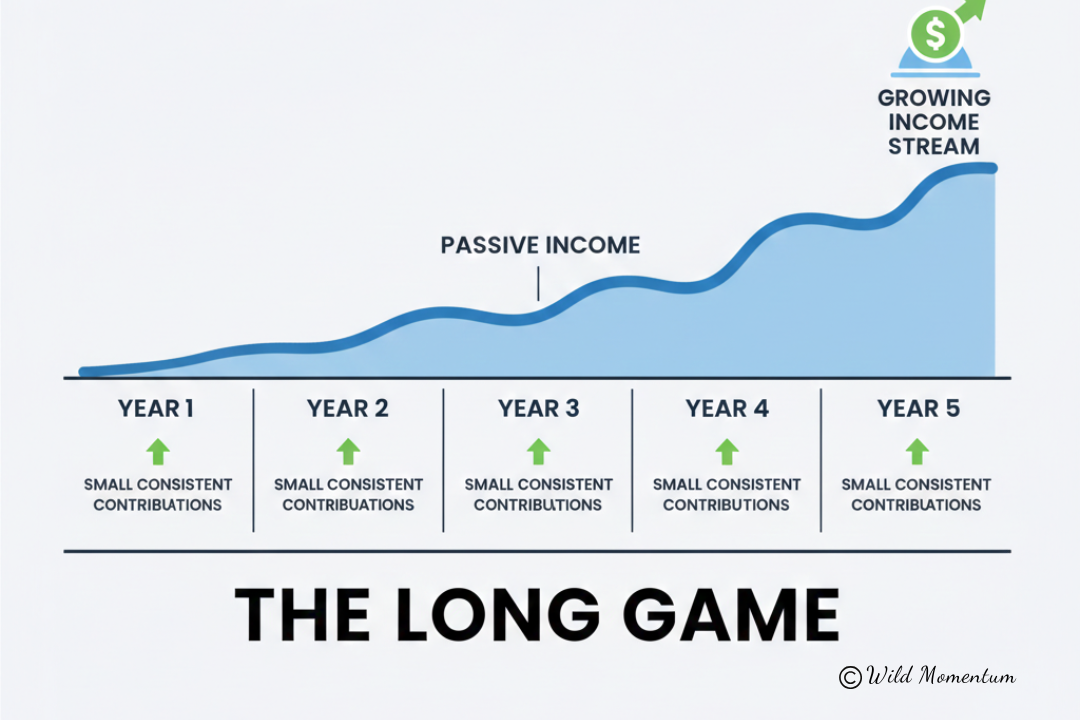
The third myth is that passive income will quickly replace your salary. For most people, it takes years to build something meaningful. It’s a long-term plan, not a shortcut for an urgent money problem.
And the fourth myth is that you have to choose one or the other. The best approach actually uses both. Active income pays your bills and funds your investments. Passive income builds slowly in the background and gives you more options later on.
How Most People Actually Build It
The realistic path tends to follow a fairly consistent pattern, and it’s less dramatic than most people expect.
It usually starts with whatever you have access to right now. If your employer offers pension matching, that’s often the easiest first step into passive income. You’re essentially getting free money added to a growing investment. From there, most people start investing small amounts regularly. Even modest contributions add up over the years, especially when you reinvest the returns rather than spending them.
The key is to be patient with your timeline. Real passive income takes years to build, not months. People who get there tend to measure their progress over five to ten years, not quarter by quarter. And crucially, they keep their active income going while they build. Leaving your job before your passive income can cover your costs is one of the most common mistakes people make.
 Practical First Steps
 Practical First Steps
If you want to start shifting your income mix, a grounded approach works far better than an ambitious one.
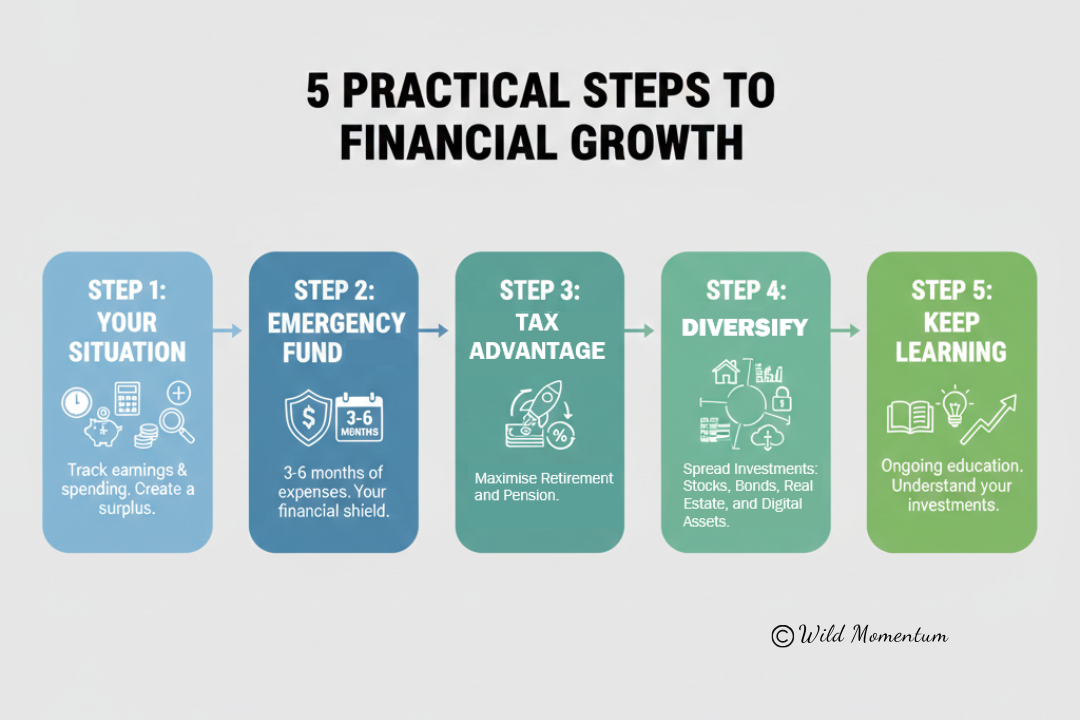
Step 1: Start by looking at your actual situation. Work out how much you’re earning per hour when you factor in commuting, preparation, and the time you spend thinking about work outside of hours. Then track your spending honestly, because you need a surplus to invest before passive income can begin to grow.
Step 2: Before you invest anything, build an emergency fund that covers three to six months of expenses. This protects you from having to dip into your investments when something unexpected comes up.
Step 3: Once that’s in place, start with tax-advantaged accounts, such as retirement funds or pension schemes. These let your money grow faster because more of it stays working for you. After that, gradually spread your investments across different asset types. Index funds, dividend stocks, bonds, property, and cash-generating digital assets all have different risk profiles, and diversifying across them lowers your overall exposure.
Step 4:The last step is ongoing: keep learning. You don’t need to become a financial expert, but understanding what you’re investing in and knowing the risks makes a real difference over time.
What Success Actually Looks Like
 What Success Actually Looks Like
The dramatic version of passive income, where someone quits their job and lives off investment returns at 35, makes for a good story. But for most people, success looks a lot quieter than that.
It looks like having a bit more breathing room in your monthly budget. Being able to say no to work that doesn’t suit you. Feeling secure enough to take a career risk or try something new. For some people, passive income eventually overtakes active income. For others, it remains a useful supplement that adds stability. Both outcomes are genuinely valuable.
The real goal isn’t to stop working. It’s to have choices. When you’re not completely dependent on trading your time for money, work becomes something you do because you want to, not only because you have to. That’s a different relationship with your finances entirely, and it’s worth building toward.
The Balance That Works
You don’t have to pick one type of income over the other. The smartest long-term approach uses both at the same time. Active income keeps things running today and funds the investments that build passive income for tomorrow. Over time, as your passive income grows, it starts to take on more of the load. That shift happens slowly, through steady effort and consistent choices, not through any single dramatic move.
Learning the difference between passive and active income isn’t really about choosing a side. It’s about seeing that having more than one type of income gives you options. Options to work differently, to take breaks, to pursue things that don’t pay right away. Your time is limited. Building income sources that account for that is one of the most practical financial decisions you can make.