
Most people picture depression as constant sadness or an inability to get out of bed. And for some people, it does look like that. But for many others, it’s far more subtle. It can look like going through the motions while feeling oddly disconnected. It can look like losing interest in things you used to enjoy without being able to explain why. It can look like being tired no matter how much you sleep, or struggling to focus in ways that feel out of character.
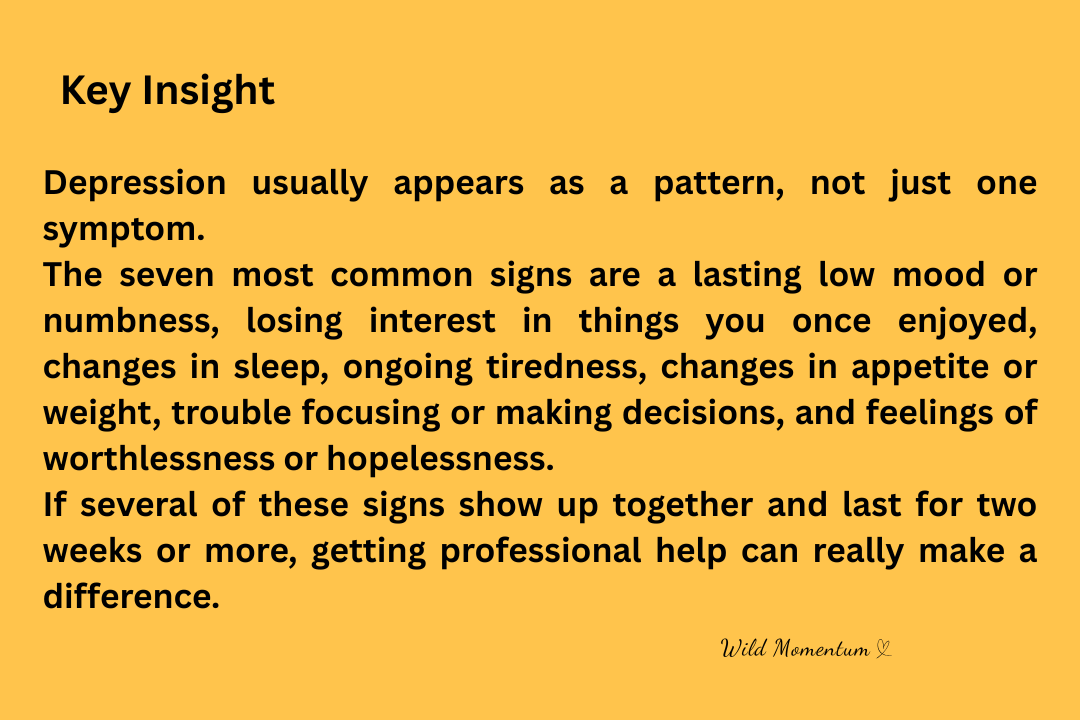
That quieter version of depression is often the one that goes unrecognised the longest. Which is exactly why understanding the signs matters. Here are seven that are worth knowing.
1. Low Mood That Doesn’t Lift
Feeling sad sometimes is a normal part of being human. Depression is different in one specific way: the low mood stays. Not just for a rough day or a hard week, but most of the day, nearly every day, for at least two weeks or more.
For some people, this shows up as sadness. For others, it’s less dramatic than that. It feels more like numbness, a flat, grey heaviness that sits in the background no matter what’s happening around you. Good news doesn’t land the way it should. Positive things feel muted. Rest doesn’t clear it. That persistence, the fact that it doesn’t lift even when life improves, is one of the clearest signals that something more than a low patch is going on.
2. Losing Interest in Things You Used to Enjoy
This one gets missed a lot, partly because it doesn’t always feel like sadness. It feels more like indifference. Things you used to look forward to, hobbies, time with people you care about, food, music, exercise, simply stop feeling worth the effort. Not in a dramatic way. Just quietly, over time.
Mental health professionals call this anhedonia, which essentially means the absence of pleasure. It matters because it tends to cause people to withdraw gradually from the things and people that would otherwise support them. That withdrawal then deepens the isolation. If you’ve noticed that not much feels enjoyable lately, and you can’t quite remember when that started, it’s worth paying attention to.
3. Changes in Sleep That Don’t Make Sense
Sleep disruption is one of the most consistent physical signs of depression, and it doesn’t always mean sleeping less. Some people find they can’t fall asleep or keep waking through the night. Others sleep far more than usual and still feel exhausted when they wake up. Some wake very early and can’t get back to sleep, no matter how tired they feel.
What these patterns have in common is that sleep stops being restorative. You can spend eight or nine hours in bed and still drag yourself through the day feeling completely drained. Over time, that kind of poor-quality sleep affects your mood, concentration, and ability to cope, which makes everything else harder to manage.
4. Fatigue That Rest Doesn’t Fix
This is one of the most physically uncomfortable aspects of depression, and also one of the most misunderstood. The tiredness that comes with depression isn’t the kind that a good night’s sleep sorts out. It’s deep and ongoing, and it makes even simple tasks feel disproportionately difficult.
Replying to a message, making a meal, having a shower: things that usually take little thought can start to feel genuinely overwhelming. People often describe feeling physically heavy, slowed down, or like they’re moving through something thick. This isn’t laziness or a lack of discipline. It comes from real changes in how the brain and nervous system are functioning under prolonged emotional stress.
5. Noticeable Changes in Appetite or Weight
Depression often disrupts eating habits, though not always in the same direction. Some people lose their appetite almost entirely and lose weight without trying. Others find themselves eating much more than usual, often reaching for comfort foods, as a way of managing how they feel. Either pattern is worth noticing, particularly when it’s a clear shift from what’s normal for you.
What matters here isn’t the number on the scale. It’s the change itself, especially when it comes alongside other signs on this list. Significant shifts in how you’re eating can also affect energy levels and mood, which can feed back into how you feel overall.
6. Trouble Concentrating or Making Decisions
Depression affects thinking in ways that can feel very disorienting, particularly for people who normally feel sharp or capable. Difficulty focusing on a conversation or a page of text, forgetting things you’d normally remember, slower thinking, struggling to make even small decisions: these are all common and recognised signs.
People often describe it as mental fog. You know the thought you’re looking for, but you can’t quite reach it. This can be especially frustrating because it affects work, relationships, and the ability to do the things that might otherwise help you feel better. It’s important to know that this is a real effect of how depression acts on the brain, not a sign of weakness or a loss of ability.
7. Feelings of Worthlessness, Guilt, or Hopelessness
This is often the most painful part of depression. It’s not just feeling low. It’s the shift in how you see yourself and your future. Harsh self-criticism that seems to come from nowhere. A sense that you’re a burden to the people around you. Guilt about things that aren’t your fault, or that happened a long time ago. A persistent feeling that things won’t get better, even when there’s no clear reason to think that.
In more serious cases, these feelings can lead to thoughts about death or not wanting to be here. If that’s happening, please reach out to a professional or crisis support service now rather than waiting. You don’t need to be at a breaking point to deserve help.
It’s the Pattern That Matters, Not One Symptom
Almost everyone experiences some of these signs at some point. A bad week, a stressful period, a run of poor sleep: these can produce signs that overlap with depression without being depression. What distinguishes depression is the combination of symptoms, how long they last, usually two weeks or more, and how much they get in the way of daily life.
Depression can affect anyone regardless of age, personality, or circumstances. It’s also treatable. With the right support, most people do recover. But getting that support starts with recognising that something is wrong.
When to Reach Out
If several of these signs feel familiar, and they’ve been present for more than a couple of weeks, it’s worth talking to someone. That might be your GP or primary care doctor as a starting point. It might be a therapist or counsellor. It might be someone you trust enough to be honest with.
If you’re having thoughts of self-harm or suicide, please contact emergency services or a crisis line in your country right away. You don’t have to be certain something is seriously wrong before you ask for help. Wondering whether you might need support is reason enough to seek it.
Awareness Is Where It Starts
Knowing the signs of depression doesn’t mean diagnosing yourself or anyone else. It means being able to recognise when something has shifted and responding with care rather than dismissal. Depression tends to grow quietly, and often in silence. The more people understand what it actually looks like, the sooner those conversations can start and the sooner the right help can be found.
If this article helped you make sense of something you’ve been noticing, in yourself or someone close to you, consider that recognition a first step. It’s a meaningful one.
This article is for awareness and general information only, not for medical diagnosis. If these signs resonate with you, please speak with a qualified mental health professional.